Track D · SDI
Sewer & Drain Camera Inspection Certification
The NISCR Sewer & Drain Camera Inspection Certification is a $199 online, self-paced course — 8 lessons (≈2.5 hours) with a 20-question exam; pass and download a verifiable certificate the same day, valid 2 years.
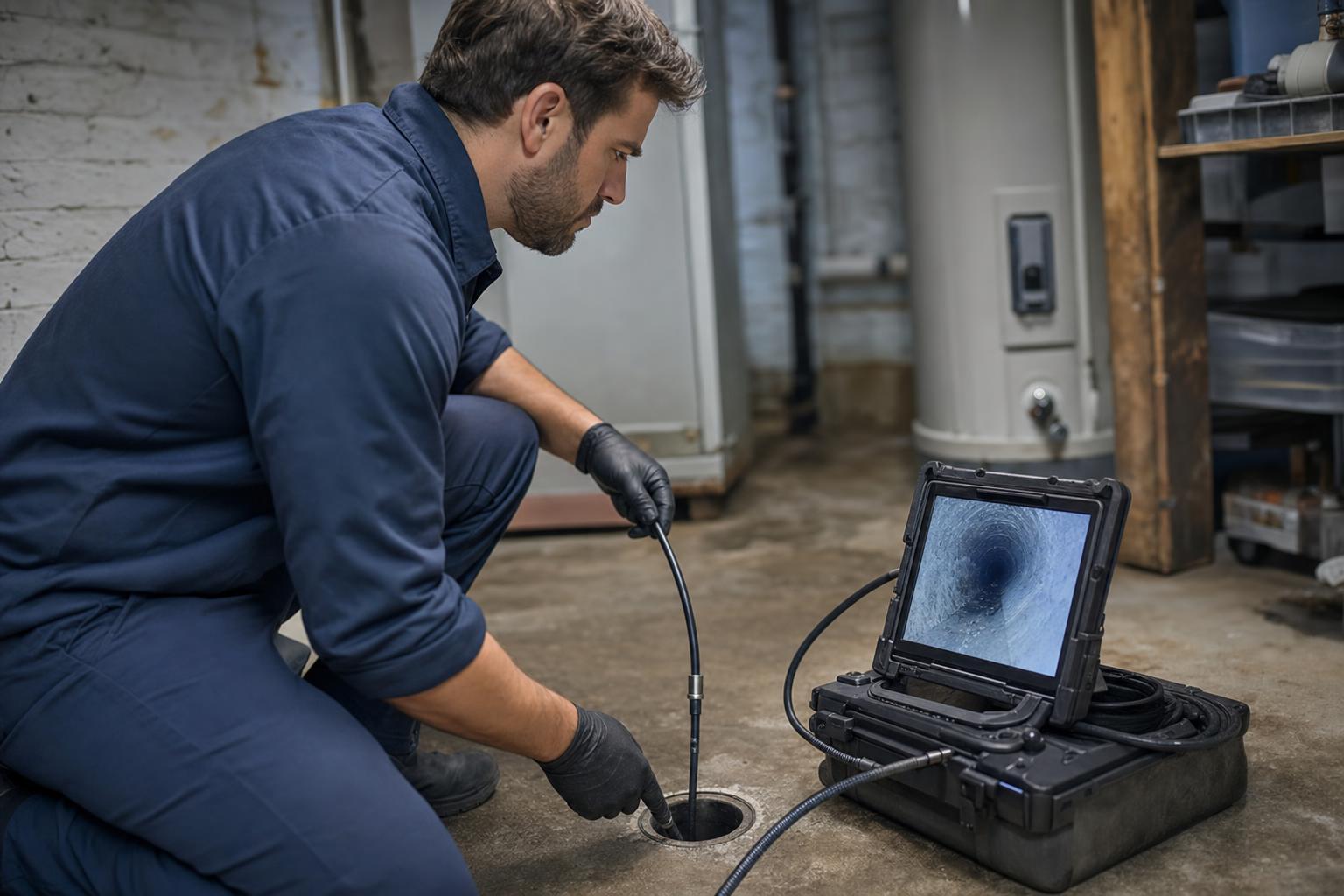
Master the standards-based process for inspecting sewer and drain lines with a CCTV camera, accurately diagnosing what is wrong inside the pipe, and proving your skill with a credential homeowners, plumbers, and inspectors can verify in seconds.
- Self-paced
- Instant certificate
- 2-year validity
- Format
- Online, self-paced
- Lessons
- 8 lessons
- Time
- ≈2.5 hours
- Exam
- 20 questions
- Pass mark
- 75% · retries
- Documents
- 3 included
- Certificate
- Same day
- Validity
- 2 years
Earning potential
How much can you earn?
Technician hourly
$22-40 / hr
Self-employed inspection ticket
$150-650+
Owner potential
Varies by market
Illustrative ranges — actual earnings vary by location, effort, and experience, and are not guaranteed.
Why it pays
Why get certified?
Diagnose with confidence
Stop guessing where the problem is. A camera inspection lets you see roots, breaks, and bellies on screen, so you can tell a customer exactly what is wrong and what it will take to fix it.
Charge more per job
A documented camera inspection with a clear report and locate is a billable service on its own, and it justifies the larger repair or replacement work that follows.
Build trust fast
Video footage and a written report turn a vague sales pitch into proof. Customers, real estate agents, and insurers act faster when they can see the pipe for themselves.
Start or grow a business
Camera inspection is a low-overhead service you can add to plumbing, drain cleaning, or a standalone inspection company, opening doors to pre-purchase real estate work and city contract jobs.
Curriculum
Inside the Sewer & Drain Camera Inspection course
8 self-paced lessons, then a 20-question exam — 75% to pass, unlimited retries. Exam questions are drawn from a larger question pool, so every retry gets a fresh set.
- 1
Lesson 1: Sizing Up the Job — Access, Scope, and What the Inspection Can and Cannot Answer
Every sewer and drain inspection begins before the camera moves, with two judgments that shape everything after: what line you are actually looking at, and why. A customer who says 'the toilet backs up' may have a clogged branch, a bellied main, or a collapsed lateral out at the street — and each of those is a different scope, a different access point, and a different conversation. Getting the scope right at the door is what separates a clean, billable inspection from a stuck rod and an argument.
- 2
Lesson 2: Safety at the Access Point and Around Wastewater
A sewer inspection stacks hazards a normal service call does not: pressurized wastewater behind a cap, pathogens in every drop, drain chemicals that splash, electricity near wet ground, work at height on roofs, and — at its most dangerous — confined spaces that can kill in minutes. The professional habit is a deliberate hazard check before anything is opened, every time, because the line does not care that you have done it a thousand times.
- 3
Lesson 3: The Camera System and Getting a Usable Picture
A push-rod CCTV inspection system is a chain of parts, and a weak link anywhere costs you the picture the whole job depends on. Know each part cold. The camera head holds a lens, an LED light ring, and usually a sonde — a small transmitter that lets a surface locator find the head later. The head connects to a flexible push rod (also called push cable), stiff enough to drive forward yet flexible enough to follow bends. The rod feeds off a reel that carries a footage counter, and everything terminates at a monitor and recorder where you watch and save the inspection.
- 4
Lesson 4: Getting the Camera In and Down the Line
With the access chosen and the site made safe, the next skill is feeding the camera cleanly to where the problem is — without kinking the rod, jamming the head, or losing the picture. Good rod technique is quiet and patient; the line tells you what it wants, and forcing it is how equipment gets damaged and cameras get stranded.
- 5
Lesson 5: Reading Blockages, Roots, Grease, and Buildup
Once the head is moving and lit, the work becomes interpretation: telling normal from trouble, and telling one kind of trouble from another. Clear pipe walls with water flowing freely along the invert is the picture of a healthy line. Trouble is anything that narrows the bore, interrupts the flow, or does not belong. The four buildup-and-blockage conditions you will see most are roots, grease, scale and soap, and foreign objects — and each points at a different cause and a different fix.
- 6
Lesson 6: Structural Defects — Bellies, Cracks, Breaks, Offsets, and Collapse
Structural findings are the ones that drive real money — excavation, lining, replacement — so accuracy and consistent language matter more here than anywhere else in the inspection. Buildup can be cleaned; structure has to be repaired. Learn to name each defect precisely and to grade it, because a plumber, an engineer, or an insurer will make a dig-or-line-or-replace decision from your words and stills.
- 7
Lesson 7: Identifying Pipe Material and Diameter On Screen
You almost never see a buried pipe from the outside, so the camera has to tell you what it is made of — and material is not trivia. It predicts the defects you will find, explains the ones you see, and shapes the repair recommendation. A crack in brittle clay, corrosion in cast iron, and deformation in Orangeburg each mean something different, and naming the material correctly is part of a finding that a repair professional can trust.
- 8
Lesson 8: Locating the Defect and Writing a Report That Gets Trusted
Finding a defect is only half the job; the customer cannot dig a footage number on a screen. The two deliverables that make an inspection worth paying for are an accurate ground location of the problem and a clear, honest written report. Both turn what you saw into something a repair crew, an agent, or an insurer can act on.
Curriculum
What you’ll learn
- Set up, operate, and maintain a push-rod CCTV camera system and self-leveling head
- Safely access sewer and drain lines through cleanouts, vents, and pulled fixtures
- Identify and distinguish root intrusion, grease buildup, blockages, and foreign objects on screen
- Recognize structural defects including bellies, breaks, cracks, offsets, and collapsed sections
- Determine pipe material and approximate diameter from on-screen visual cues
- Locate the depth and ground position of a defect using a sonde and locator wand
- Capture clear, well-lit video and still images with accurate footage references
- Produce a professional inspection report that documents findings and recommended next steps
What's included
Everything you get with enrollment
One price — the course, the exam, the certificate, and the tools to put it to work.
Self-paced lessons
Guided lessons with key points, safety callouts, real job scenarios, and practice checks — about 2–3 focused hours.
A real certification exam
A 20-question exam drawn from a larger question pool — 75% to pass, and every retry gets fresh questions.
Professional field documents
Branded checklists, customer agreements, and job logs printed with your company letterhead — unlocked when you pass.
Instant, verifiable certificate
Pass and download your Certificate of Completion the same day — with a unique ID anyone can confirm online.
2-year validity + renewal
Your credential is valid for two years, with a simple renewal path before it expires.
Free Find-a-Pro listing
Once certified, claim a free listing so homeowners in your area can hire you.
The process
How it works
Enroll & pay
Secure checkout, instant course access.
Complete the course + pass the exam
Guided lessons with real job scenarios, then a 20-question exam — 75% to pass, unlimited retries.
Download your certificate
Personalized certificate generated instantly, with a unique verification ID.
Your credential
Your certificate
- Holder name and course title
- Unique certificate ID
- Issue date and expiry date (2-year validity)
- Online verification by ID
A NISCR Certificate of Completion confirms completion of NISCR training and examination. It is a professional credential, not a government license. Where local law requires a license to perform a service, the technician is responsible for obtaining it.
Certificate
of Completion
This certifies that
Your Name
has completed
Sewer & Drain Camera Inspection
- Certificate No.
- Valid
- NISCR-SDI-2026-XXXXXX
- 2 years
Enroll
Enroll today
$199
Course + certificate + a simple renewal option.
Try it risk-free for 3 days — full refund before you begin the final exam.
Better value
This course is part of the Complete Inspection Bundle — 6 certifications for $1000 $1244 (save $244).
View the bundle →Keep going
Related certifications
Questions
Frequently asked questions
- Is this a license?
- No. A NISCR Certificate of Completion is a professional credential confirming that you completed NISCR training and passed the examination. It is not a government license. You are responsible for any license, registration, or permit your state or locality requires to perform plumbing or sewer work.
- How fast do I get my certificate?
- Same day. As soon as you finish the course and pass the exam, your Certificate of Completion is available to download and print immediately, with no waiting period.
- Do I need a state license to do camera inspections?
- It varies by state and locality. Some places require a plumbing or contractor license to perform or sell sewer work, while a standalone visual inspection may be treated differently. Always check the rules in your area before taking paid work.
- How long is the certificate valid?
- The certificate is valid for 2 years (24 months). After that you can renew by completing the current version of the course, which keeps your knowledge of equipment and best practices up to date.
- Is there an exam?
- Yes. The course ends with a 20-question exam drawn from a larger question pool. You need 75% to pass, and you get unlimited retries at no extra cost — each retry draws a fresh set of questions, so you can review the material and try again whenever you are ready.
- Is the course self-paced?
- Yes. The entire course is online and self-paced. You can start, stop, and resume on any device, and there are no scheduled class times or live sessions to attend.