Track D · HMI
Home Inspection Certification
The NISCR Home Inspection Certification is a $249 online, self-paced course — 8 lessons (≈3 hours) with a 20-question exam; pass and download a verifiable certificate the same day, valid 2 years.
Master a repeatable, systems-based process for inspecting a home from foundation to roof, and prove it with a verifiable certificate buyers, sellers, and agents can check for themselves. In states that license home inspectors, this certificate complements — it does not replace — state licensing requirements.
- Self-paced
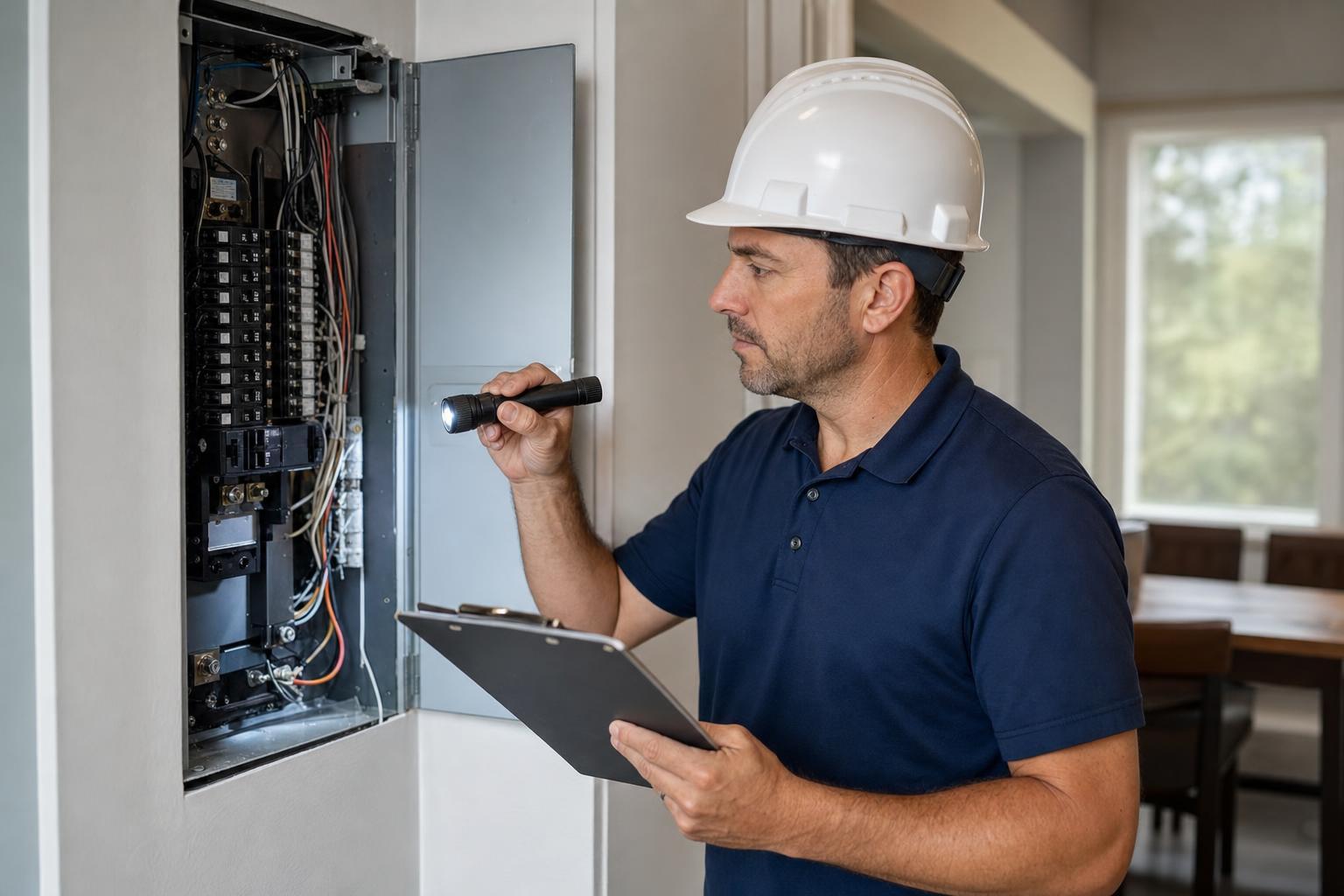
- Instant certificate
- 2-year validity
- Format
- Online, self-paced
- Lessons
- 8 lessons
- Time
- ≈3 hours
- Exam
- 20 questions
- Pass mark
- 75% · retries
- Documents
- 3 included
- Certificate
- Same day
- Validity
- 2 years
Earning potential
How much can you earn?
Inspector per inspection
$300-600+
Busy week (multiple jobs)
$1,500-4,000+
Owner potential
Varies by market
Illustrative ranges — actual earnings vary by location, effort, and experience, and are not guaranteed.
Why it pays
Why get certified?
Win referral work
Agents and buyers prefer inspectors who follow a clear, documented standard and explain findings plainly.
Charge with confidence
Documented, standards-based training signals competence that supports professional inspection fees.
Build trust fast
A verifiable credential reassures buyers making one of the largest purchases of their lives.
Start or grow a business
Everything you need to walk a home step by step and deliver a report clients act on.
Curriculum
Inside the Home Inspection course
8 self-paced lessons, then a 20-question exam — 75% to pass, unlimited retries. Exam questions are drawn from a larger question pool, so every retry gets a fresh set.
- 1
Lesson 1: Scope, Standards, and the Repeatable Walk
A home inspection is a visual, non-invasive assessment of a property's readily accessible systems and components, reported as they perform on the day of the inspection. Every word in that sentence earns its place. Visual means you evaluate what can be seen and operated with normal controls — you do not open walls, dismantle equipment, or dig. Readily accessible means you inspect what can be reached safely without moving the occupant's belongings or forcing anything open. And the day of the inspection means you are documenting a moment in time, not issuing a warranty on the future.
- 2
Lesson 2: Staying Safe on the Inspection
No finding on a home inspection is worth an injury, and the working conditions are genuinely hazardous: you work alone, in unfamiliar buildings, on ladders and roof edges, around live electricity, and in crawlspaces nobody has entered in years. Professionals manage that risk the way they manage the inspection itself — with a repeatable process applied before the interesting part starts.
- 3
Lesson 3: Water Management — Roof, Exterior, and Grounds
Water destroys more houses than fire, and it almost never announces itself with a flood. It works by inches: a missing piece of flashing feeding a wall cavity for five years, a downspout soaking a footing every storm. So inspect the exterior the way water experiences it — starting at the ridge and following gravity to the grade — and treat the whole assembly as one continuous shedding system. Every transition where one material meets another is a candidate leak.
- 4
Lesson 4: Structure and Foundation — Reading Movement
Everything in the house eventually bears on the structure, which is why structural findings carry the most weight — and why the inspector's role must stay precise. You observe, measure, photograph, and describe evidence of movement or distress, and you recommend a structural engineer when the evidence is significant. You do not diagnose causes with certainty, prescribe repairs, or reassure anyone that a wall is 'fine.' Precision about the role is not timidity; it is what keeps the report accurate and the liability survivable.
- 5
Lesson 5: Electrical and Plumbing — Small Defects, Big Hazards
Electrical and plumbing produce more safety findings than every other system combined, and they punish improvisation. The method is the same for both: identify the materials and equipment, test a representative sample using normal controls, know the short list of defects that matter most, and route hazards to licensed trades. You are the smoke detector, not the fire department.
- 6
Lesson 6: HVAC and Fuel-Fired Equipment
Heating and cooling is where the inspection touches machinery that can kill quietly — combustion appliances share their air with the household — so this system rewards a fixed routine: operate with normal controls, read the age, inspect the venting, and treat every sign of combustion trouble as a safety finding.
- 7
Lesson 7: Attic, Insulation, Ventilation, and Interior
The attic is the house's confession booth: whatever the roof, the bathrooms, and the insulation work did wrong shows up here first. Treat it as the quality-control stop of the inspection — the place you verify or refute every hypothesis the exterior and interior have generated. Enter carefully: step only on framing members or installed walk boards, never on the drywall between them; keep a light on your path; mind roofing nails at scalp height; and wear a respirator around loose insulation and dust.
- 8
Lesson 8: The Report, the Client, and Closing the File
The inspection ends and the report begins — and the report is the product. Nobody pays for your walk through the house; they pay for the document that lets a nervous, non-technical reader decide what to do next. Write every significant finding to answer three questions in order: what you observed, why it matters, and what to do about it. 'Kick-out flashing missing where the garage roof meets the wall; runoff can enter the wall cavity and rot framing unseen; recommend correction by a qualified roofing contractor' — observation, significance, action, no jargon.
Curriculum
What you’ll learn
- Walk a property in a consistent sequence so no major system is skipped.
- Evaluate foundation, grading, and structure for movement, moisture, and load concerns.
- Assess roof covering, flashing, and drainage for age and failure points.
- Test and document electrical service, panels, and representative outlets safely.
- Inspect plumbing supply, drainage, water heaters, and signs of leaks.
- Evaluate HVAC operation, age, and visible distribution and safety issues.
- Check attic, insulation, and ventilation for moisture and energy problems.
- Write a clear, photo-supported report that helps buyers and sellers decide.
What's included
Everything you get with enrollment
One price — the course, the exam, the certificate, and the tools to put it to work.
Self-paced lessons
Guided lessons with key points, safety callouts, real job scenarios, and practice checks — about 2–3 focused hours.
A real certification exam
A 20-question exam drawn from a larger question pool — 75% to pass, and every retry gets fresh questions.
Professional field documents
Branded checklists, customer agreements, and job logs printed with your company letterhead — unlocked when you pass.
Instant, verifiable certificate
Pass and download your Certificate of Completion the same day — with a unique ID anyone can confirm online.
2-year validity + renewal
Your credential is valid for two years, with a simple renewal path before it expires.
Free Find-a-Pro listing
Once certified, claim a free listing so homeowners in your area can hire you.
The process
How it works
Enroll & pay
Secure checkout, instant course access.
Complete the course + pass the exam
Guided lessons with real job scenarios, then a 20-question exam — 75% to pass, unlimited retries.
Download your certificate
Personalized certificate generated instantly, with a unique verification ID.
Your credential
Your certificate
- Holder name and course title
- Unique certificate ID
- Issue date and expiry date (2-year validity)
- Online verification by ID
A NISCR Certificate of Completion confirms completion of NISCR training and examination. It is a professional credential, not a government license. Where local law requires a license to perform a service, the technician is responsible for obtaining it.
Certificate
of Completion
This certifies that
Your Name
has completed
Home Inspection
- Certificate No.
- Valid
- NISCR-HMI-2026-XXXXXX
- 2 years
Enroll
Enroll today
$249
Course + certificate + a simple renewal option.
Try it risk-free for 3 days — full refund before you begin the final exam.
Better value
This course is part of the Complete Inspection Bundle — 6 certifications for $1000 $1244 (save $244).
View the bundle →
Questions
Frequently asked questions
- Is this a license?
- No. A NISCR Certificate of Completion is a professional credential confirming you completed NISCR training and examination. It is not a government license. Where local law requires a license to perform home inspections, you are responsible for obtaining it.
- How fast do I get the certificate?
- Immediately. As soon as you complete the course and pass the exam, your personalized certificate is generated and available to download, typically the same day you enroll.
- Does my state require a license to inspect homes?
- It varies. Many states regulate or license home inspectors, while others do not. Check your state and local requirements; this certification adds to, but does not replace, any required license or registration.
- How long is the certificate valid?
- Two years (24 months) from the issue date. You will be eligible to renew, and we will remind you before it expires.
- Is there an exam?
- Yes — a 20-question exam drawn from a larger question pool, with a 75% pass mark and unlimited retries; each retry draws a fresh set of questions. It confirms you absorbed the core material.
- Can I learn at my own pace?
- Yes. The course is fully self-paced and online; start, pause, and finish whenever suits you.