Track D · RFI
Roof Inspection Certification
The NISCR Roof Inspection Certification is a $199 online, self-paced course — 8 lessons (≈2.5 hours) with a 20-question exam; pass and download a verifiable certificate the same day, valid 2 years.
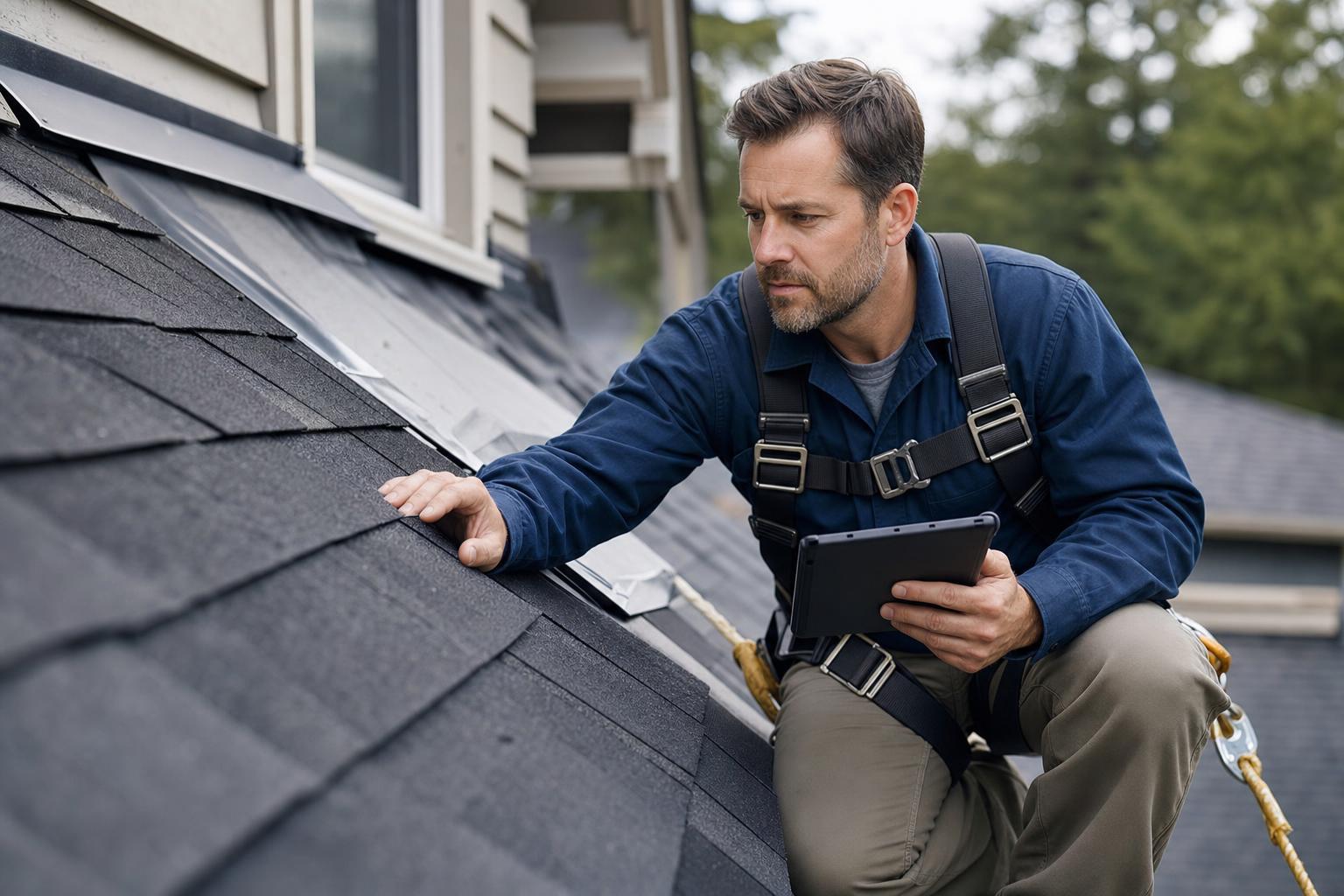
Master a systematic, safety-first process for inspecting residential roofs, identifying wear and storm damage, and documenting your findings clearly enough that homeowners and insurers act on them with confidence.
- Self-paced
- Instant certificate
- 2-year validity
- Format
- Online, self-paced
- Lessons
- 8 lessons
- Time
- ≈2.5 hours
- Exam
- 20 questions
- Pass mark
- 75% · retries
- Documents
- 3 included
- Certificate
- Same day
- Validity
- 2 years
Earning potential
How much can you earn?
Technician hourly
$18-30 / hr
Self-employed inspection fee
$150-600+
Owner potential
Varies by market
Illustrative ranges — actual earnings vary by location, effort, and experience, and are not guaranteed.
Why it pays
Why get certified?
Document damage for insurance claims
Storm seasons drive a steady demand for trustworthy roof inspections. Knowing how to spot and document hail, wind, and water damage the way adjusters expect lets you support homeowner claims and become a go-to inspector for agents and contractors.
Charge more with confidence
A clear, photo-backed inspection report justifies a professional fee. When you can explain what you found, why it matters, and what the realistic options are, clients stop shopping on price and start paying for expertise.
Build trust fast
Homeowners are cautious of roofers who push replacements. A neutral, standards-based inspection process and an honest report help you earn referrals and repeat business, even when the right call is no repair at all.
Start or grow a roofing business
Inspection skills are the foundation of roofing sales, repair, and restoration work. Whether you add inspections to an existing trade or launch your own service, this credential gives you a marketable, repeatable service to build on.
Curriculum
Inside the Roof Inspection course
8 self-paced lessons, then a 20-question exam — 75% to pass, unlimited retries. Exam questions are drawn from a larger question pool, so every retry gets a fresh set.
- 1
Lesson 1: Reading the Roof System and How Each Material Fails
Every roof inspection begins with a single question that shapes everything after it: what am I looking at, and how is this material supposed to age? You cannot judge whether a roof is failing until you know what normal wear looks like for that system, because the same symptom means opposite things on different roofs. Curling on a twenty-year-old asphalt roof is simply old age; the identical curling on a five-year-old roof points to a defect or a ventilation problem. Identify the material first, and the rest of the inspection has a frame of reference; skip that step and every finding after it is a guess.
- 2
Lesson 2: Working Safely and Accessing the Roof
Roof inspection is one of the higher-risk jobs in the trades, and most injuries happen during access, not while standing on the roof. The professional habit is to run a deliberate hazard assessment before anyone climbs. Walk the full perimeter and read the situation from the ground: the pitch, the height, the surrounding obstacles, and the weather. Wet, frosty, mossy, or steep roofs are not safe to walk, and a good inspector knows when to inspect from a ladder, from the eaves, or with binoculars and a drone rather than stepping onto the surface at all.
- 3
Lesson 3: How Roofs Weather, Age, and Shed Water
A roof is a water-shedding system, not a waterproof box, and understanding that distinction is the core science of inspection. Almost no sloped roof is sealed against water; instead it is layered so that water runs off faster than it can get in. Shingles, tile, and shakes overlap so each course sheds onto the one below, gravity carries the water down and off the eaves, and an underlayment beneath the surface catches whatever slips past. When you inspect, you are really asking one question at every point: is water still being shed away, or has something started letting it linger, pond, or run backward?
- 4
Lesson 4: The Inspection Method, Tools, and Documentation Baseline
A roof inspection is only as good as its method. Working a roof randomly guarantees missed defects and inconsistent reports, so professionals follow the same sequence every time and let discipline, not memory, catch the problems. You cannot report on what you did not look at, and you cannot defend a finding you did not document — the method exists to guarantee both, on every roof, regardless of how routine it seems.
- 5
Lesson 5: Classifying Storm, Hail, and Wind Damage
Storm damage is where inspection skill earns its keep, because hail and wind leave specific signatures that differ from ordinary aging — and because the classification you write down drives real money and real decisions. Calling wear 'hail' or missing genuine wind damage both destroy your credibility, so this is the work where careful, honest classification matters most. An inspector is not paid to find damage; they are paid to classify correctly, whatever the answer turns out to be.
- 6
Lesson 6: Flashing, Penetrations, and Ventilation Systems
Most leaks do not start in the open field of the roof; they start where the roof is interrupted. That single fact should govern how you spend your time, because trained inspectors give the most attention to transitions and penetrations — the places engineered to keep water out precisely because water most wants in there.
- 7
Lesson 7: Tracing Leaks and Reading Water Damage
Water is deceptive because it rarely drips straight down. It enters at one point, travels along rafters, decking, or framing, and shows up on a ceiling several feet away from where it got in. Your job is to work backward from the evidence to the actual entry point, and that means inspecting inside the house as well as on top of it — the roof and the attic are two halves of one investigation, and skipping either half leaves the puzzle unsolved.
- 8
Lesson 8: Condition Assessment, Service Life, and the Report
A roof inspection is only as good as the report that comes out of it. The report is what the homeowner, the contractor, and the insurance adjuster actually use to make decisions, so it must be clear, factual, and well documented — everything in the previous lessons exists to feed this one deliverable. A brilliant inspection recorded in a vague report is a job half done, and the report is the only part of your work most people will ever see.
Curriculum
What you’ll learn
- Set up and climb a roof safely using proper ladder placement, fall protection, and weather judgment.
- Identify the major residential roofing materials and recognize how each one ages and fails.
- Distinguish normal wear from hail, wind, and storm damage using consistent visual indicators.
- Inspect flashing, penetrations, and roof-to-wall transitions for the most common leak points.
- Evaluate attic ventilation and intake or exhaust balance and connect it to roof and deck problems.
- Trace leak signs from interior stains back to likely entry points on the roof.
- Estimate remaining service life and recommend repair, monitor, or replacement honestly.
- Produce a clear, photo-documented inspection report homeowners and insurers can act on.
What's included
Everything you get with enrollment
One price — the course, the exam, the certificate, and the tools to put it to work.
Self-paced lessons
Guided lessons with key points, safety callouts, real job scenarios, and practice checks — about 2–3 focused hours.
A real certification exam
A 20-question exam drawn from a larger question pool — 75% to pass, and every retry gets fresh questions.
Professional field documents
Branded checklists, customer agreements, and job logs printed with your company letterhead — unlocked when you pass.
Instant, verifiable certificate
Pass and download your Certificate of Completion the same day — with a unique ID anyone can confirm online.
2-year validity + renewal
Your credential is valid for two years, with a simple renewal path before it expires.
Free Find-a-Pro listing
Once certified, claim a free listing so homeowners in your area can hire you.
The process
How it works
Enroll & pay
Secure checkout, instant course access.
Complete the course + pass the exam
Guided lessons with real job scenarios, then a 20-question exam — 75% to pass, unlimited retries.
Download your certificate
Personalized certificate generated instantly, with a unique verification ID.
Your credential
Your certificate
- Holder name and course title
- Unique certificate ID
- Issue date and expiry date (2-year validity)
- Online verification by ID
A NISCR Certificate of Completion confirms completion of NISCR training and examination. It is a professional credential, not a government license. Where local law requires a license to perform a service, the technician is responsible for obtaining it.
Certificate
of Completion
This certifies that
Your Name
has completed
Roof Inspection
- Certificate No.
- Valid
- NISCR-RFI-2026-XXXXXX
- 2 years
Enroll
Enroll today
$199
Course + certificate + a simple renewal option.
Try it risk-free for 3 days — full refund before you begin the final exam.
Better value
This course is part of the Complete Inspection Bundle — 6 certifications for $1000 $1244 (save $244).
View the bundle →Keep going
Related certifications
Questions
Frequently asked questions
- Is this a license?
- No. A NISCR Certificate of Completion is a professional credential confirming that you completed NISCR training and passed the examination. It is not a government license. Some states and localities require a contractor or inspector license to perform or charge for certain work, and you are responsible for meeting any license requirements that apply where you operate.
- How fast do I get my certificate?
- You get it the same day. As soon as you finish the course and pass the exam, your Certificate of Completion is available to download and print immediately.
- Do I need a state license to inspect roofs?
- It depends on your state and local rules, and on what you do with the inspection. Requirements vary widely, so check your state contractor board or licensing authority. This certification demonstrates training and competence but does not replace any required license.
- How long is the certificate valid?
- The certificate is valid for 2 years (24 months). Renewing keeps your knowledge current with evolving materials and best practices and keeps your credential active for clients.
- Is there an exam, and what if I fail?
- Yes. The exam is 20 questions drawn from a larger question pool, and you need 75% to pass. You get unlimited retries at no extra cost, and each retry draws a fresh set of questions, so you can review the material and try again as many times as you need.
- Is the course self-paced?
- Yes. The course is fully self-paced and online. Start, stop, and resume whenever it works for you, and finish on your own schedule.