Track B · PRW
Pressure Washing Certification
The NISCR Pressure Washing Certification is a $199 online, self-paced course — 8 lessons (≈2.5 hours) with a 20-question exam; pass and download a verifiable certificate the same day, valid 2 years.
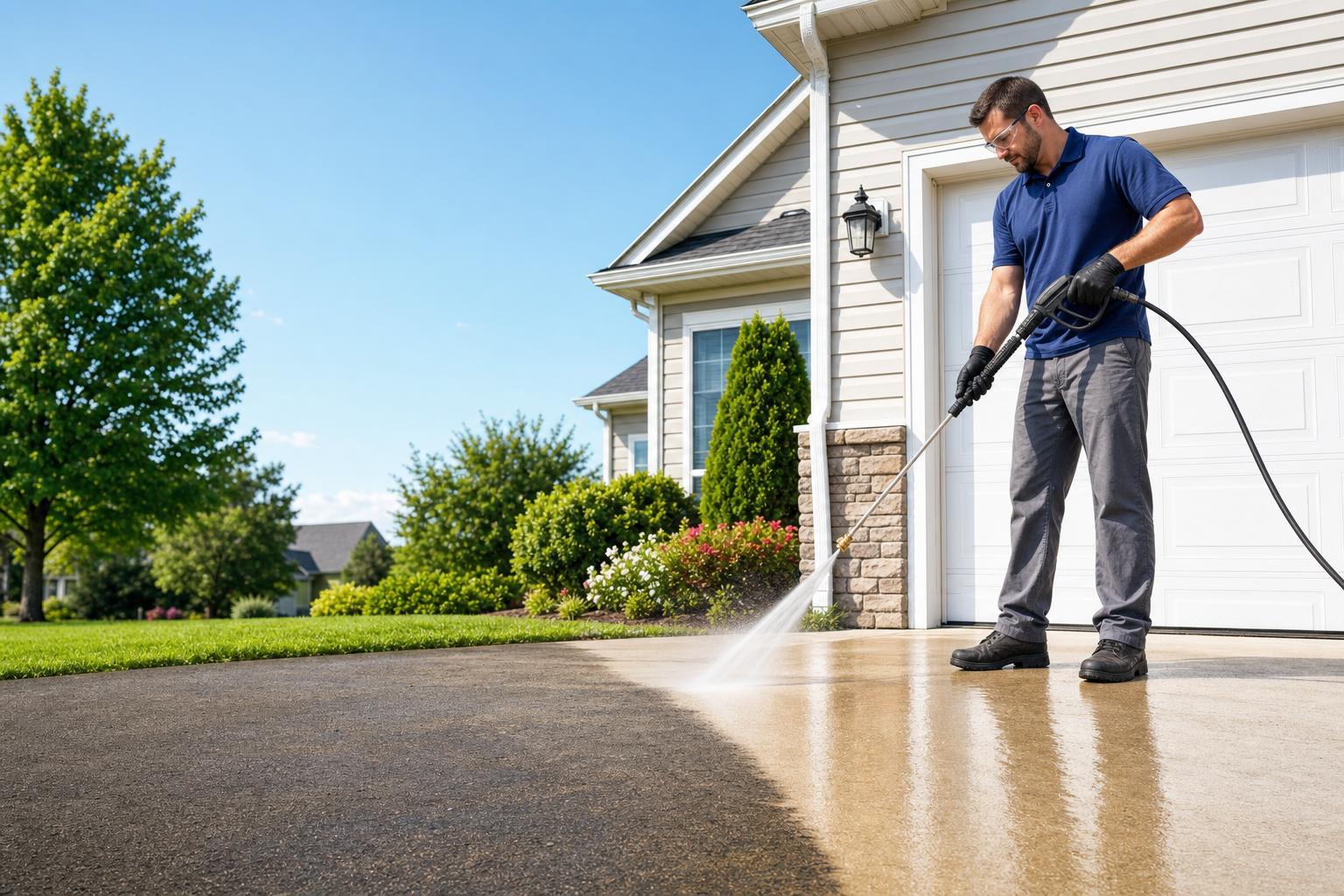
Master the standards-based process for cleaning exterior surfaces the right way — matching pressure, flow, nozzle, and detergent to each surface, soft-washing what pressure would destroy, and working safely around heights, electricity, and runoff — and prove your skill with a credential homeowners and property managers can verify in seconds.
- Self-paced
- Instant certificate
- 2-year validity
- Format
- Online, self-paced
- Lessons
- 8 lessons
- Time
- ≈2.5 hours
- Exam
- 20 questions
- Pass mark
- 75% · retries
- Documents
- 3 included
- Certificate
- Same day
- Validity
- 2 years
Earning potential
How much can you earn?
Per-job ticket
$150–600 / job
Recurring commercial accounts
scheduled route & facility work
Owner potential
Varies by market
Illustrative ranges — actual earnings vary by location, effort, and experience, and are not guaranteed.
Why it pays
Why get certified?
Win commercial and HOA contracts
Property managers and facility buyers favor washers who can show a documented, surface-appropriate process and a real understanding of safety and runoff — not just a wand and a ladder.
Protect every surface you touch
Knowing which surfaces take high pressure and which must be soft-washed lets you avoid etched concrete, gouged wood, driven-in siding water, and stripped roof shingles — the damage claims that sink new businesses.
Charge more for proven skill
A credential signals professionalism that justifies premium pricing over uncertified competitors who compete only on price and leave streaks, damage, and callbacks behind.
Build repeat business
Clean results that last, delivered safely and without surface damage, turn one-time jobs into recurring residential, commercial, and route accounts.
Curriculum
Inside the Pressure Washing course
8 self-paced lessons, then a 20-question exam — 75% to pass, unlimited retries. Exam questions are drawn from a larger question pool, so every retry gets a fresh set.
- 1
Lesson 1: PSI vs. GPM — Pressure, Flow, and How Cleaning Actually Works
Most people think a pressure washer cleans by sheer pressure, and most people are half wrong. Two numbers describe what a machine does, and understanding the difference between them is the foundation of every good decision you will make about surfaces, nozzles, and methods. Get this pair right and the rest of the trade makes sense; get it wrong and you will either fail to clean or destroy the surface trying.
- 2
Lesson 2: Nozzles, Spray Angle, and Standoff Distance
The nozzle is the single most important safety and quality control on a pressure washer, because it decides how the machine's pressure is delivered to the surface. The same pump, the same PSI, can polish a window frame or carve a line into wood depending entirely on which tip is on the lance and how far you hold it. Learning nozzles is learning to control force, and control is the whole game.
- 3
Lesson 3: Matching Method to Surface — Concrete, Siding, Wood, and Roofs
The defining skill of professional exterior cleaning is not pressure — it is judgment about which surface can take pressure and which cannot. Different materials have wildly different tolerances, and the same approach that safely blasts a concrete driveway will destroy a roof or gouge a fence. A professional reads the surface first and chooses the method to fit it, never the other way around.
- 4
Lesson 4: Detergents and Chemical Safety
Professionals clean with chemistry, not just water. The single biggest change from amateur to professional pressure washing is the realization that the detergent does most of the actual cleaning, and the water mostly applies it and rinses it away. Detergents let you clean effectively at lower, safer pressures, lift stains that force alone cannot touch, and handle biological growth that will otherwise come right back. But chemistry brings its own hazards, and using it safely is a core professional skill.
- 5
Lesson 5: Working Safely — Heights, Ladders, Electrical, and the Spray Itself
Pressure washing looks routine, but it stacks several serious hazards that cause real injuries every year: falls from height, electrical contact, and the spray itself, which is more dangerous than most operators respect. A professional treats safety as part of the method, not an interruption to it, because the injuries here are severe and entirely preventable.
- 6
Lesson 6: Surface Damage — Causes, Prevention, and Testing First
The fastest way to lose money and reputation in this trade is to damage the surface you were hired to clean. Surface damage is almost always self-inflicted and almost always preventable, because it comes from a small number of controllable causes. Understanding those causes — and building the habit of testing before you commit — is what separates a washer who leaves surfaces clean from one who leaves callbacks and claims.
- 7
Lesson 7: Environmental Responsibility and Wash-Water Runoff
Everything you spray onto a surface has to go somewhere, and where it goes is a responsibility professionals take seriously — both because it is the right thing and because it is increasingly regulated. Wash water from exterior cleaning is not clean: it carries loosened dirt, oil and grease, biological growth, paint particles, detergents, and whatever else was on the surface. Letting that runoff flow untreated into a storm drain or a waterway is a pollution problem, and in many places a regulatory violation.
- 8
Lesson 8: Equipment Maintenance, Troubleshooting, and Documenting the Job
A pressure washer is a system of pumps, hoses, fittings, and nozzles under high pressure, and it rewards maintenance and punishes neglect. Equipment that is cared for runs reliably, performs to spec, and lasts; equipment that is ignored fails on the job, underperforms, and creates hazards. The final professional skill is keeping your gear working and documenting your work so results are repeatable and defensible.
Curriculum
What you’ll learn
- Explain the difference between pressure (PSI) and flow (GPM) and why flow, not just pressure, drives cleaning and rinsing.
- Select the correct nozzle by spray angle and match pressure and distance to each surface — concrete, siding, wood, and roofing.
- Choose soft-washing with low pressure and the right detergent for surfaces that high pressure would damage, such as roofs and painted wood.
- Select, dilute, and apply cleaning detergents safely per the product label, and understand basic chemical-mixing hazards.
- Work safely at height and around ladders, and keep high-pressure spray and water away from electrical hazards.
- Recognize how pressure, distance, and dwell can damage surfaces, and test an inconspicuous area before committing to a method.
- Contain and direct wash-water runoff responsibly and follow local rules on what may reach storm drains.
- Maintain and troubleshoot pumps, hoses, and nozzles, and document the job so results are repeatable and defensible.
What's included
Everything you get with enrollment
One price — the course, the exam, the certificate, and the tools to put it to work.
Self-paced lessons
Guided lessons with key points, safety callouts, real job scenarios, and practice checks — about 2–3 focused hours.
A real certification exam
A 20-question exam drawn from a larger question pool — 75% to pass, and every retry gets fresh questions.
Professional field documents
Branded checklists, customer agreements, and job logs printed with your company letterhead — unlocked when you pass.
Instant, verifiable certificate
Pass and download your Certificate of Completion the same day — with a unique ID anyone can confirm online.
2-year validity + renewal
Your credential is valid for two years, with a simple renewal path before it expires.
Free Find-a-Pro listing
Once certified, claim a free listing so homeowners in your area can hire you.
The process
How it works
Enroll & pay
Secure checkout, instant course access.
Complete the course + pass the exam
Guided lessons with real job scenarios, then a 20-question exam — 75% to pass, unlimited retries.
Download your certificate
Personalized certificate generated instantly, with a unique verification ID.
Your credential
Your certificate
- Holder name and course title
- Unique certificate ID
- Issue date and expiry date (2-year validity)
- Online verification by ID
A NISCR Certificate of Completion confirms completion of NISCR training and examination. It is a professional credential, not a government license. Where local law requires a license to perform a service, the technician is responsible for obtaining it.
Certificate
of Completion
This certifies that
Your Name
has completed
Pressure Washing
- Certificate No.
- Valid
- NISCR-PRW-2026-XXXXXX
- 2 years
Enroll
Enroll today
$199
Course + certificate + a simple renewal option.
Try it risk-free for 3 days — full refund before you begin the final exam.
Keep going
Related certifications
Questions
Frequently asked questions
- Is this a license?
- No. A NISCR Certificate of Completion is a professional credential confirming you completed NISCR training and passed the examination. It is not a government license. Local business licensing, contractor rules, and environmental or wastewater regulations may apply to exterior cleaning where you work, and you are responsible for meeting them. This certificate complements those obligations; it does not replace them.
- How fast do I get the certificate?
- The same day. After you complete the coursework and pass the exam — 20 questions drawn from a larger question pool, with a 75% pass mark and unlimited retries, each retry drawing a fresh set of questions — your certificate is issued immediately so you can start using it on quotes, your website, and your truck right away.
- Does my state require a license for this work?
- It varies. Many areas do not require a specific license to pressure wash, but local business licensing, sales-tax registration, contractor rules, and — importantly — wastewater and storm-drain regulations may apply, and some municipalities restrict where wash water may go. Check your city and state requirements. This certification complements those obligations, it does not replace them.
- Do I need my own equipment to take this course?
- No. The methods you learn — matching PSI, GPM, nozzle, distance, and detergent to each surface, and soft-washing what pressure would damage — apply to any pressure-washing setup, from a homeowner-grade unit to a commercial trailer rig, so you can start with what you have and scale up later.
- Will this teach me how to clean roofs and delicate surfaces?
- Yes. Surface matching is central to the course. You will learn why roofs, painted wood, and other fragile surfaces should be soft-washed at low pressure with the right detergent rather than blasted, so you clean effectively without stripping shingles, gouging wood, or forcing water where it does not belong.
- Is the course self-paced?
- Yes. The course is fully online and self-paced. Start, stop, and resume on any device, and complete it on your own schedule from anywhere.