Texas · UPH
Upholstery & Fabric Cleaning Certification in Texas
Upholstery & Fabric Cleaning certification in Texas trains you to safely clean delicate furniture fabrics affected by dust, humidity, smoke, and water exposure across the state's homes and businesses. NISCR's online, self-paced UPH program covers fabric identification, cleaning agents, and safe extraction methods, with a same-day certificate of completion when you finish.
100% online & self-paced — your certificate the same day, anywhere in Texas.
- Self-paced
- Instant certificate
- 2-year validity
Licensing
Do you need a license in Texas?
Upholstery and fabric cleaning is generally not a separately licensed trade in Texas, though a local business license is typically required to operate. When fabric cleaning is part of smoke, water, or mold restoration, the related TDLR mold rules and restoration considerations apply to those specific tasks. Verify current municipal and state requirements for your services. A NISCR certificate is a professional credential, not a government license.
| Government license | Professional certification (NISCR) | |
|---|---|---|
| What it is | Legal permission from a state agency to perform regulated work. | Proof you completed standards-based training and passed an exam — a verifiable certificate anyone can check at niscr.com/verify. |
| Who issues it | Your state licensing board or agency. | NISCR — a private certification provider, not a government body. |
| Legally required to work? | Sometimes — it depends on your state and the specific service. | No — it is a professional credential, not a legal requirement. |
| Why it matters | Required by law where it applies; operating without one can mean fines or penalties. | Verifiable proof of training that builds customer confidence and helps you compete for better-paying jobs; it does not replace a credential a specific insurance program requires. |
| How you get it | Apply through your state; requirements and timelines vary. | 100% online and self-paced — download your certificate the same day. |
A NISCR Certificate of Completion confirms completion of NISCR training and examination. It is a professional credential, not a government license. Where local law requires a license to perform a service, the technician is responsible for obtaining it. Licensing rules change and vary by city and county. Always confirm current requirements with your state licensing board before performing work.
Local demand
The upholstery & fabric cleaning market in Texas
Texas's humidity and dust mean upholstered furniture readily absorbs odors, moisture, and allergens, while smoke from structure and wildfire events leaves fabrics needing specialized cleaning. Large metros with active hospitality, office, and rental sectors in Houston, Dallas, and San Antonio, plus flood-affected households, generate consistent demand for upholstery and fabric cleaning expertise.
Earning potential
What upholstery & fabric cleaning pros earn in Texas
Upholstery and fabric cleaning specialists in Texas often see illustrative pay in the rough range of $16 to $27 per hour, with higher per-job income for owner-operators and those serving commercial and hospitality clients. These figures are illustrative, not guaranteed, and vary by region, volume, and the services offered.
Per upholstery job
$100–400
Add-on to a carpet job
high-margin upsell
Recurring fabric care
repeat seasonal revenue
Illustrative ranges — actual earnings vary by location, effort, and experience, and are not guaranteed.
Curriculum
What you’ll learn
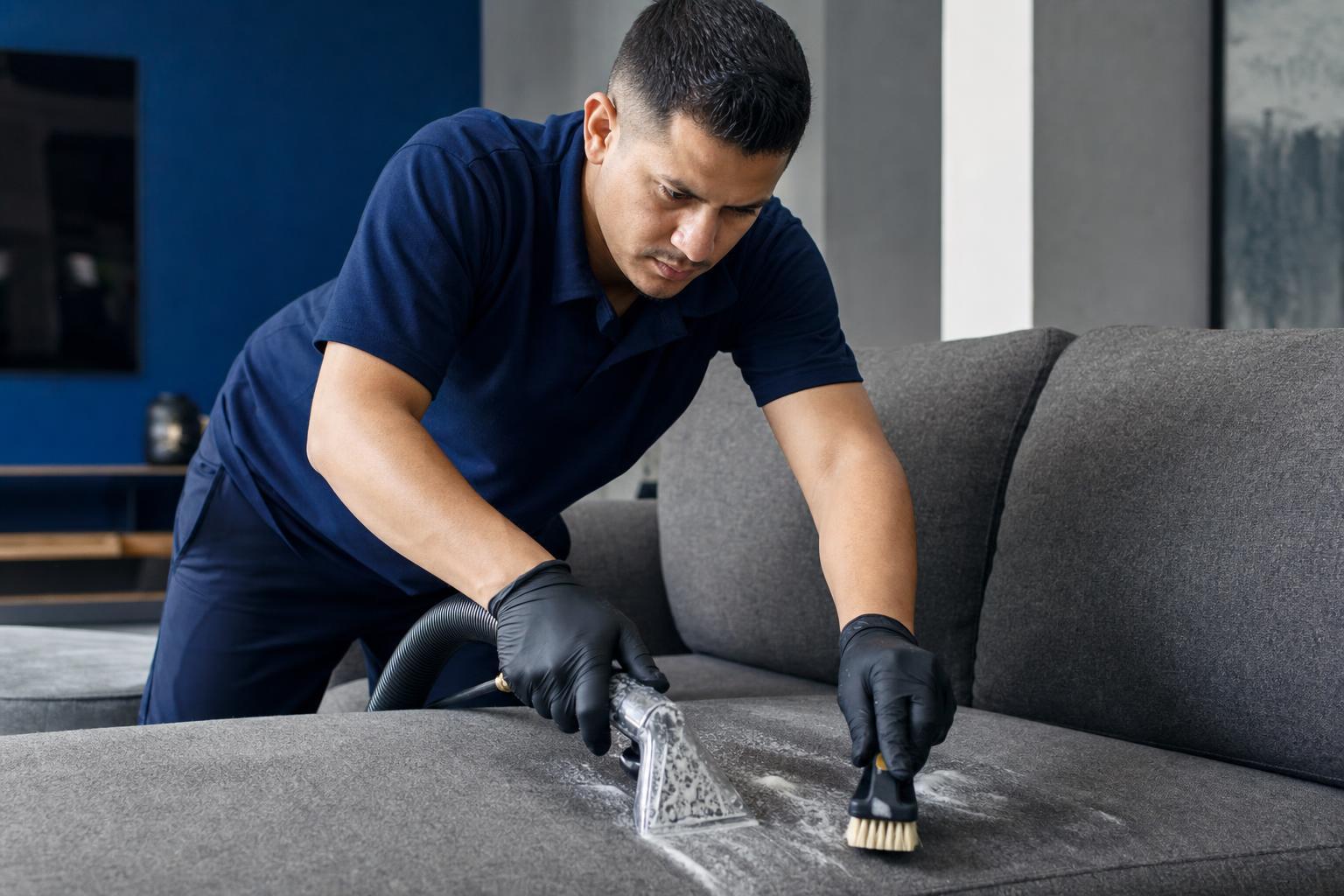
- Identify natural and synthetic fibers — cotton, linen, wool, silk, rayon, polyester, olefin, and blends — and match each to a safe cleaning method.
- Read manufacturer cleaning codes (W, S, WS, X) and translate them into the correct water-based, solvent, or dry approach.
- Run colorfastness and bleed tests on a hidden area before committing to a full clean.
- Select between hot-water extraction, low-moisture encapsulation, and dry-solvent methods based on fiber, construction, and soil type.
- Treat delicate and decorative textiles — velvet, chenille, microfiber, and antique pieces — without crushing pile, watermarking, or shrinkage.
- Pre-treat and safely remove common stains while avoiding dye migration, browning, and texture distortion.
By city
Upholstery & Fabric Cleaning certification in Texas cities
The process
How it works
Enroll & pay
Secure checkout, instant course access.
Complete the course + pass the exam
Guided lessons with real job scenarios, then a 20-question exam — 75% to pass, unlimited retries.
Download your certificate
Personalized certificate generated instantly, with a unique verification ID.
Questions
Upholstery & Fabric Cleaning certification in Texas — FAQ
- Do I need a license for upholstery cleaning in Texas?
- Upholstery and fabric cleaning is generally not separately licensed in Texas, though a local business license usually applies, and restoration-related work may involve TDLR mold rules. Verify current requirements. A NISCR certificate is training, not a government license.
- Is there demand for upholstery cleaning in Texas?
- Yes. Humidity, dust, smoke events, and active hospitality and rental markets in Texas's major metros create steady demand for technicians who can safely clean delicate furniture fabrics.