Missouri · HSC
HVAC System Cleaning Certification in Missouri
HVAC System Cleaning certification in Missouri trains you to clean coils, blowers, and air-handling components so heating and cooling systems run efficiently through hot summers and cold winters. NISCR's online, self-paced HVAC System Cleaning course is fully remote with a same-day certificate, so you can offer professional system-cleaning services across Missouri without waiting.
100% online & self-paced — your certificate the same day, anywhere in Missouri.
- Self-paced
- Instant certificate
- 2-year validity
Licensing
Do you need a license in Missouri?
Cleaning HVAC systems sits close to regulated territory: in Missouri, work that involves servicing, repairing, or altering HVAC equipment may require an HVAC or mechanical license or local registration, even though basic cleaning often does not. Because the line varies by city and county, verify current Missouri and municipal licensing requirements before performing any equipment work. A NISCR certificate is a professional credential, not an HVAC or mechanical license.
| Government license | Professional certification (NISCR) | |
|---|---|---|
| What it is | Legal permission from a state agency to perform regulated work. | Proof you completed standards-based training and passed an exam — a verifiable certificate anyone can check at niscr.com/verify. |
| Who issues it | Your state licensing board or agency. | NISCR — a private certification provider, not a government body. |
| Legally required to work? | Sometimes — it depends on your state and the specific service. | No — it is a professional credential, not a legal requirement. |
| Why it matters | Required by law where it applies; operating without one can mean fines or penalties. | Verifiable proof of training that builds customer confidence and helps you compete for better-paying jobs; it does not replace a credential a specific insurance program requires. |
| How you get it | Apply through your state; requirements and timelines vary. | 100% online and self-paced — download your certificate the same day. |
A NISCR Certificate of Completion confirms completion of NISCR training and examination. It is a professional credential, not a government license. Where local law requires a license to perform a service, the technician is responsible for obtaining it. Licensing rules change and vary by city and county. Always confirm current requirements with your state licensing board before performing work.
Local demand
The hvac system cleaning market in Missouri
Missouri's wide temperature swings, from triple-digit humid summers to polar-vortex winters, push HVAC systems hard, and dirty coils reduce efficiency exactly when homeowners need it most. Demand is strong in St. Louis, Kansas City, and Springfield where year-round heating and cooling make clean, efficient systems a priority.
Earning potential
What hvac system cleaning pros earn in Missouri
HVAC System Cleaning technicians in Missouri commonly see illustrative ranges around $19-$32 per hour, with higher pay for those who combine cleaning with licensed HVAC service work. Earnings depend on credentials, scope of work, and employer and are never guaranteed.
Per-job ticket
$350–800
Add-on coil + blower service
$150–400 / unit
Commercial contracts
recurring monthly/quarterly revenue
Illustrative ranges — actual earnings vary by location, effort, and experience, and are not guaranteed.
Curriculum
What you’ll learn
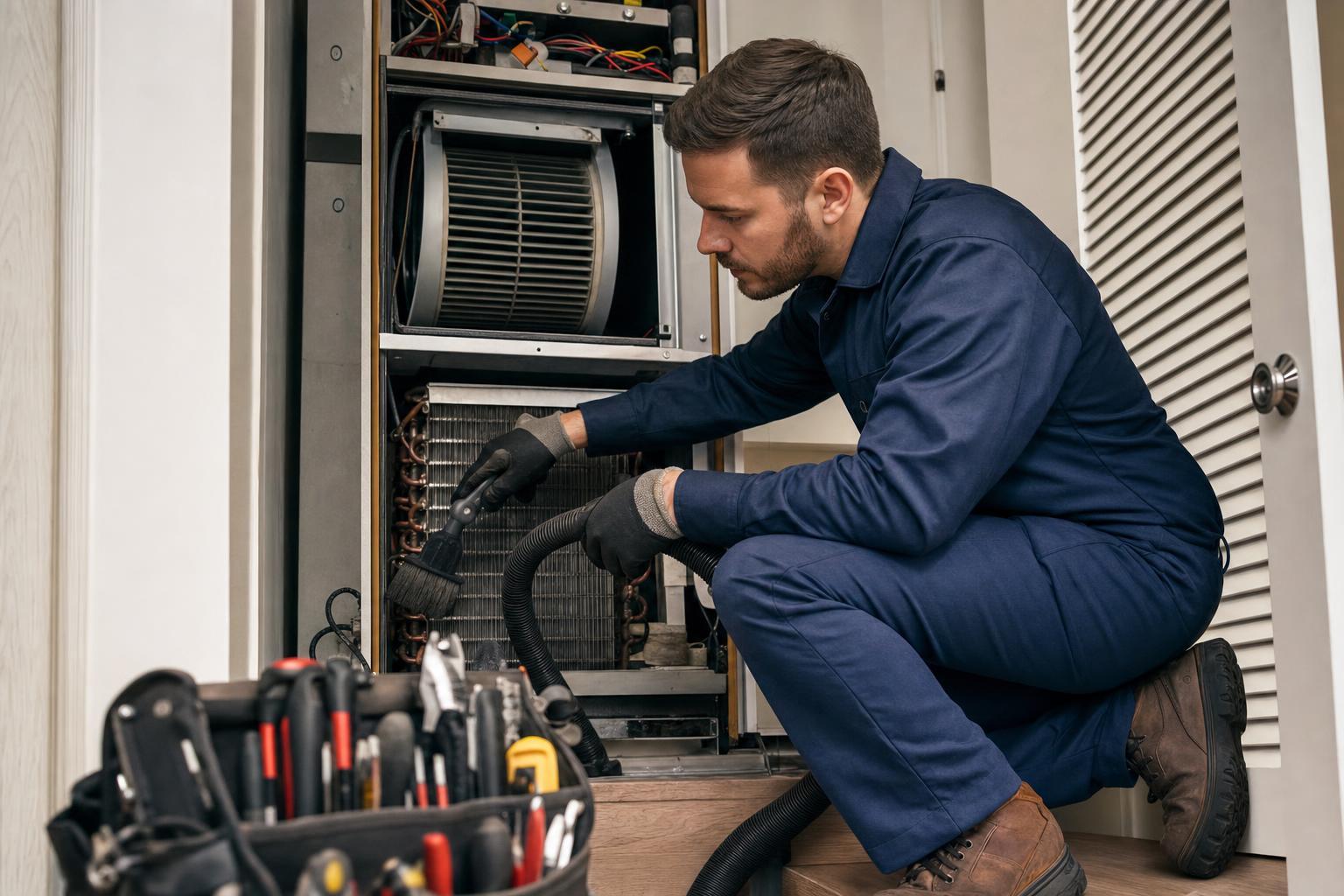
- Clean and rinse evaporator and condenser coils without bending fins or damaging the coil, using the correct foaming and no-rinse cleaners for each coil type.
- Disassemble, clean, and rebalance blower wheels and motor assemblies to remove caked debris that chokes airflow and wastes energy.
- Service condensate drain pans and lines — clearing clogs, treating biofilm, and verifying proper slope and drainage to prevent overflow and microbial growth.
- Open, inspect, and clean air-handler interiors and plenums, including interior insulation surfaces, following containment and source-removal standards.
- Set up negative-air containment and HEPA collection so dislodged debris is captured rather than spread through the occupied space.
- Identify and document microbial contamination, biofilm, and rust, and know when to refer remediation beyond routine cleaning.
By city
HVAC System Cleaning certification in Missouri cities
The process
How it works
Enroll & pay
Secure checkout, instant course access.
Complete the course + pass the exam
Guided lessons with real job scenarios, then a 20-question exam — 75% to pass, unlimited retries.
Download your certificate
Personalized certificate generated instantly, with a unique verification ID.
Questions
HVAC System Cleaning certification in Missouri — FAQ
- Do I need an HVAC license to clean HVAC systems in Missouri?
- Basic cleaning often does not require a license, but servicing, repairing, or altering HVAC equipment in Missouri may require an HVAC or mechanical license or local registration. Verify current requirements with your city or county, and remember the NISCR certificate is not an HVAC license.
- Is HVAC system cleaning in demand in Missouri?
- Yes. Missouri's extreme summer and winter temperatures keep HVAC systems running hard year-round, so efficient, clean systems are a priority for homeowners in major metros and rural areas alike.