
Ohio · DVI
Dryer Vent Installation Certification in Ohio
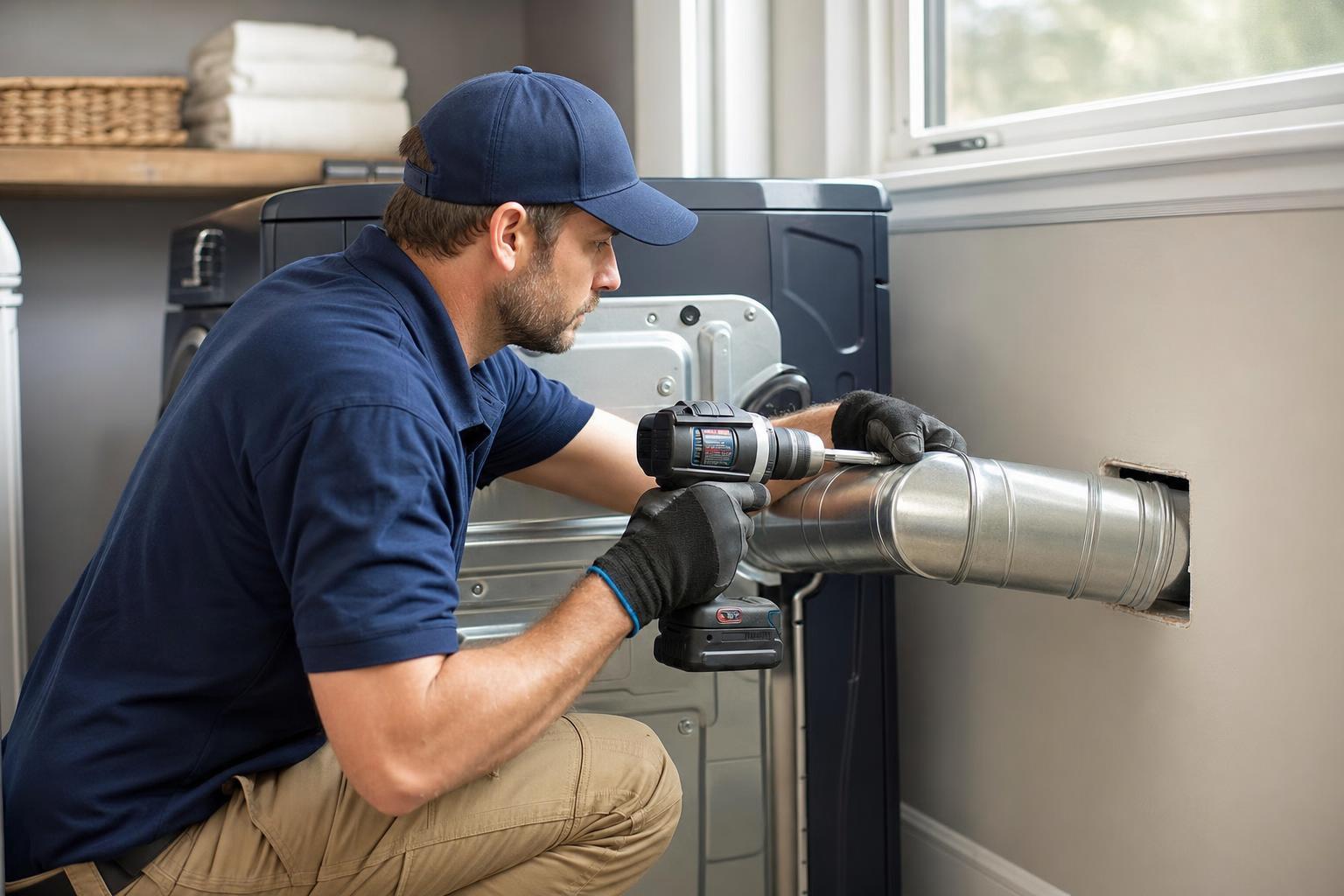
Dryer Vent Installation certification from NISCR trains Ohio technicians to route, connect, and properly terminate dryer venting for safety and efficiency. The course is fully online and self-paced, with a same-day certificate on completion. It complements dryer-vent cleaning and appliance services for technicians across Ohio.
100% online & self-paced — your certificate the same day, anywhere in Ohio.
- Self-paced
- Instant certificate
- 2-year validity
Licensing
Do you need a license in Ohio?
Dryer vent installation can fall under contractor or mechanical building codes in Ohio, particularly in new construction or when penetrating walls and roofs, and local permit requirements vary by city. While straightforward replacements may not require licensing, work tied to mechanical systems or new builds often does. Always verify current state and local requirements before working. A NISCR certificate is a professional credential that documents training, not a government-issued license.
| Government license | Professional certification (NISCR) | |
|---|---|---|
| What it is | Legal permission from a state agency to perform regulated work. | Proof you completed standards-based training and passed an exam — a verifiable certificate anyone can check at niscr.com/verify. |
| Who issues it | Your state licensing board or agency. | NISCR — a private certification provider, not a government body. |
| Legally required to work? | Sometimes — it depends on your state and the specific service. | No — it is a professional credential, not a legal requirement. |
| Why it matters | Required by law where it applies; operating without one can mean fines or penalties. | Verifiable proof of training that builds customer confidence and helps you compete for better-paying jobs; it does not replace a credential a specific insurance program requires. |
| How you get it | Apply through your state; requirements and timelines vary. | 100% online and self-paced — download your certificate the same day. |
A NISCR Certificate of Completion confirms completion of NISCR training and examination. It is a professional credential, not a government license. Where local law requires a license to perform a service, the technician is responsible for obtaining it. Licensing rules change and vary by city and county. Always confirm current requirements with your state licensing board before performing work.
Local demand
The dryer vent installation market in Ohio
Ohio's cold winters mean dryers and their venting are essential and heavily used, and proper installation is critical for fire safety in a state where dryer-related fires spike in heating season. New suburban construction around Columbus and the metros, plus renovations and additions in older homes, generates ongoing need for correctly installed venting that meets code.
Earning potential
What dryer vent installation pros earn in Ohio
Dryer vent installers in Ohio often see illustrative pay around 17 to 29 dollars an hour, with experienced technicians handling new-construction and complex routing earning more. Bundling installation with cleaning services adds revenue. These figures are illustrative and never guaranteed.
Per installation
$150–500
Bundled with a cleaning
$250–700
New-construction rough-in (per unit)
$200–450
Illustrative ranges — actual earnings vary by location, effort, and experience, and are not guaranteed.
Curriculum
What you’ll learn
- Calculate maximum allowable duct length and deduct equivalent length for each elbow to keep runs within code.
- Select and join rigid metal duct, transition duct, and connectors that meet UL 2158A and manufacturer specifications.
- Reroute existing flex or non-compliant runs to a shorter, straighter path that improves airflow and drying time.
- Install a code-compliant exterior termination with a backdraft damper and no screen to prevent lint buildup and pest entry.
- Seal joints with foil tape or approved fasteners while avoiding sheet-metal screws that snag lint inside the duct.
- Maintain required clearances and proper slope when running duct through walls, ceilings, attics, and crawlspaces.
By city
Dryer Vent Installation certification in Ohio cities
The process
How it works
Enroll & pay
Secure checkout, instant course access.
Complete the course + pass the exam
Guided lessons with real job scenarios, then a 20-question exam — 75% to pass, unlimited retries.
Download your certificate
Personalized certificate generated instantly, with a unique verification ID.
Questions
Dryer Vent Installation certification in Ohio — FAQ
- Do I need a license to install dryer vents in Ohio?
- It depends on scope. New construction and work penetrating walls or roofs can fall under contractor or mechanical codes with local permits, while simple replacements may not. Verify current state and city requirements first.
- Is dryer vent installation in demand in Ohio?
- Yes. Heavy winter dryer use, fire-safety needs, ongoing suburban construction, and home renovations all drive demand for properly installed, code-compliant venting.
- Is a NISCR certificate a contractor license?
- No. It is a professional training credential, separate from any Ohio contractor or mechanical license and any local permit your installation work may require.