Connecticut · DVC
Dryer Vent Cleaning Certification in Connecticut
Dryer Vent Cleaning certification in Connecticut prepares you for a low-barrier, high-need service in a state full of older homes with long, lint-prone vent runs. NISCR's online, self-paced Dryer Vent Cleaning course can be completed quickly on your schedule, with a same-day certificate when you finish. It is an excellent entry point for launching a service business across Connecticut.
100% online & self-paced — your certificate the same day, anywhere in Connecticut.
- Self-paced
- Instant certificate
- 2-year validity
Licensing
Do you need a license in Connecticut?
Dryer vent cleaning is generally not a state-licensed activity in Connecticut and has a low barrier to entry, though you typically need a local business license or registration to operate legally. Because rules vary by municipality and can change, verify current local requirements with your town and the Connecticut Department of Consumer Protection. A NISCR certificate is a professional credential demonstrating training and safety knowledge, not a government license.
| Government license | Professional certification (NISCR) | |
|---|---|---|
| What it is | Legal permission from a state agency to perform regulated work. | Proof you completed standards-based training and passed an exam — a verifiable certificate anyone can check at niscr.com/verify. |
| Who issues it | Your state licensing board or agency. | NISCR — a private certification provider, not a government body. |
| Legally required to work? | Sometimes — it depends on your state and the specific service. | No — it is a professional credential, not a legal requirement. |
| Why it matters | Required by law where it applies; operating without one can mean fines or penalties. | Verifiable proof of training that builds customer confidence and helps you compete for better-paying jobs; it does not replace a credential a specific insurance program requires. |
| How you get it | Apply through your state; requirements and timelines vary. | 100% online and self-paced — download your certificate the same day. |
A NISCR Certificate of Completion confirms completion of NISCR training and examination. It is a professional credential, not a government license. Where local law requires a license to perform a service, the technician is responsible for obtaining it. Licensing rules change and vary by city and county. Always confirm current requirements with your state licensing board before performing work.
Local demand
The dryer vent cleaning market in Connecticut
Clothes dryers run constantly through Connecticut's long, cold, damp seasons when air-drying laundry is impractical, and the state's older homes often have long or poorly routed vent runs that trap lint and create fire hazards. Dryer fires are a recognized winter risk, giving safety-minded homeowners and landlords strong reason to schedule regular vent cleaning.
Earning potential
What dryer vent cleaning pros earn in Connecticut
Dryer vent cleaning in Connecticut offers illustrative earnings around $17-$27 per hour for employees, while independent operators can earn more per visit and bundle the service with duct cleaning. These ranges are illustrative and not guaranteed; income depends on business model, route density, and pricing.
Per-job ticket
$100–200 / job
Daily route potential
5–8 jobs, low overhead
Recurring revenue
annual repeat customers
Illustrative ranges — actual earnings vary by location, effort, and experience, and are not guaranteed.
Curriculum
What you’ll learn
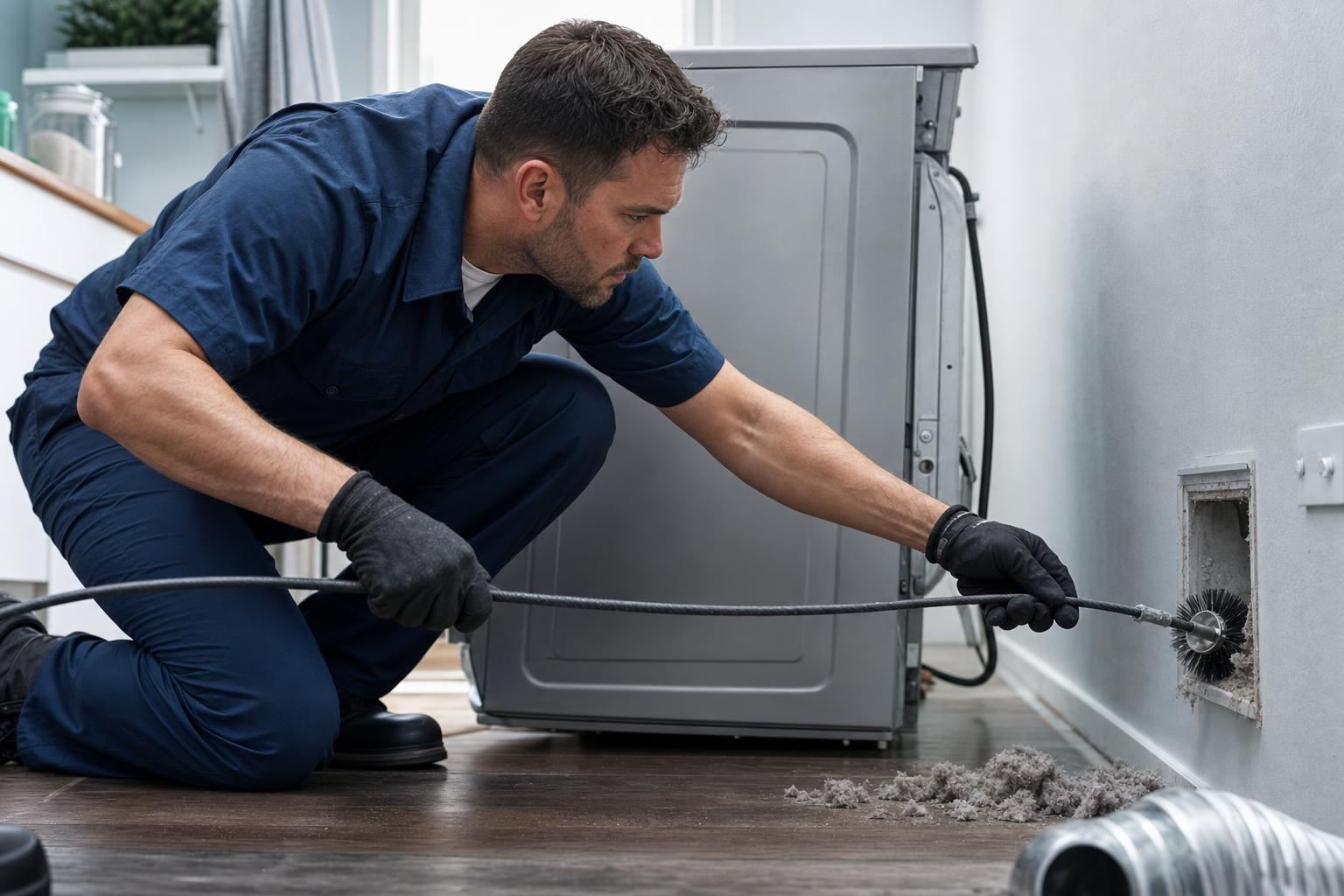
- Perform a full pre-cleaning inspection of the dryer, transition duct, and vent run to locate lint buildup, kinks, crushed sections, and improper materials.
- Identify and correct code-violating ductwork such as foil-foil flex, plastic transition hoses, and runs that exceed manufacturer length limits.
- Select and operate the right tools — rotary brush-and-rod systems, compressed-air whips, and HEPA vacuums — for the duct length, material, and routing.
- Measure airflow and static pressure before and after cleaning to verify the system meets performance targets and document the improvement.
- Safely access and service rooftop, sidewall, and shared multi-unit vent terminations, including replacing damaged or screen-clogged exterior hoods.
- Recognize the warning signs of a fire hazard — scorching, excessive drying times, overheating shutoffs — and advise the customer on corrective action.
By city
Dryer Vent Cleaning certification in Connecticut cities
The process
How it works
Enroll & pay
Secure checkout, instant course access.
Complete the course + pass the exam
Guided lessons with real job scenarios, then a 20-question exam — 75% to pass, unlimited retries.
Download your certificate
Personalized certificate generated instantly, with a unique verification ID.
Questions
Dryer Vent Cleaning certification in Connecticut — FAQ
- Do I need a license for dryer vent cleaning in Connecticut?
- It is generally not a state-licensed trade, but you usually need a local business license to operate. Verify current requirements with your municipality and the Connecticut DCP. A NISCR certificate shows training and safety knowledge, not a license.
- Is dryer vent cleaning a good business to start in Connecticut?
- Yes. Low startup costs, heavy year-round dryer use in a cold, damp climate, and the fire-safety concerns of older homes make it an accessible service with steady demand statewide.
Nearby