Massachusetts · ADC
Air Duct Cleaning Certification in Massachusetts
Air Duct Cleaning certification in Massachusetts prepares you to improve indoor air quality in homes that stay sealed through long, cold winters and humid summers. NISCR's online, self-paced Air Duct Cleaning course delivers a same-day certificate covering negative-air methods, contaminant removal, and system inspection. Earn a keyword-ready credential to grow an air duct cleaning business across Massachusetts.
100% online & self-paced — your certificate the same day, anywhere in Massachusetts.
- Self-paced
- Instant certificate
- 2-year validity
Licensing
Do you need a license in Massachusetts?
Air duct cleaning itself is generally not a separately licensed trade in Massachusetts, though you typically need a local business license or registration to operate. Note that fabricating or installing ductwork is different and can require a Massachusetts sheet metal license, and work touching refrigerant systems may require a refrigeration license. Confirm current rules with the Massachusetts Division of Occupational Licensure and your city or town before operating. A NISCR certificate is a professional credential, not a government license.
| Government license | Professional certification (NISCR) | |
|---|---|---|
| What it is | Legal permission from a state agency to perform regulated work. | Proof you completed standards-based training and passed an exam — a verifiable certificate anyone can check at niscr.com/verify. |
| Who issues it | Your state licensing board or agency. | NISCR — a private certification provider, not a government body. |
| Legally required to work? | Sometimes — it depends on your state and the specific service. | No — it is a professional credential, not a legal requirement. |
| Why it matters | Required by law where it applies; operating without one can mean fines or penalties. | Verifiable proof of training that builds customer confidence and helps you compete for better-paying jobs; it does not replace a credential a specific insurance program requires. |
| How you get it | Apply through your state; requirements and timelines vary. | 100% online and self-paced — download your certificate the same day. |
A NISCR Certificate of Completion confirms completion of NISCR training and examination. It is a professional credential, not a government license. Where local law requires a license to perform a service, the technician is responsible for obtaining it. Licensing rules change and vary by city and county. Always confirm current requirements with your state licensing board before performing work.
Local demand
The air duct cleaning market in Massachusetts
Massachusetts homes spend much of the year closed up against winter cold and summer humidity, allowing dust, allergens, and mold spores to accumulate in duct systems. The state's older housing and high seasonal-allergy and asthma awareness drive consistent demand for duct cleaning, particularly in densely populated metro Boston and surrounding suburbs.
Earning potential
What air duct cleaning pros earn in Massachusetts
Air duct cleaning technicians in Massachusetts may see illustrative pay around $18-$28 per hour, while owner-operators billing per system can earn more. These ranges are illustrative and not guaranteed; earnings depend on business model, region, equipment, and customer volume.
Residential job ticket
$300–700
Daily throughput
multiple jobs/day
Recurring book
residential + commercial contracts
Illustrative ranges — actual earnings vary by location, effort, and experience, and are not guaranteed.
Curriculum
What you’ll learn
- Inspect supply, return, and trunk lines to assess contamination level and decide whether cleaning is needed.
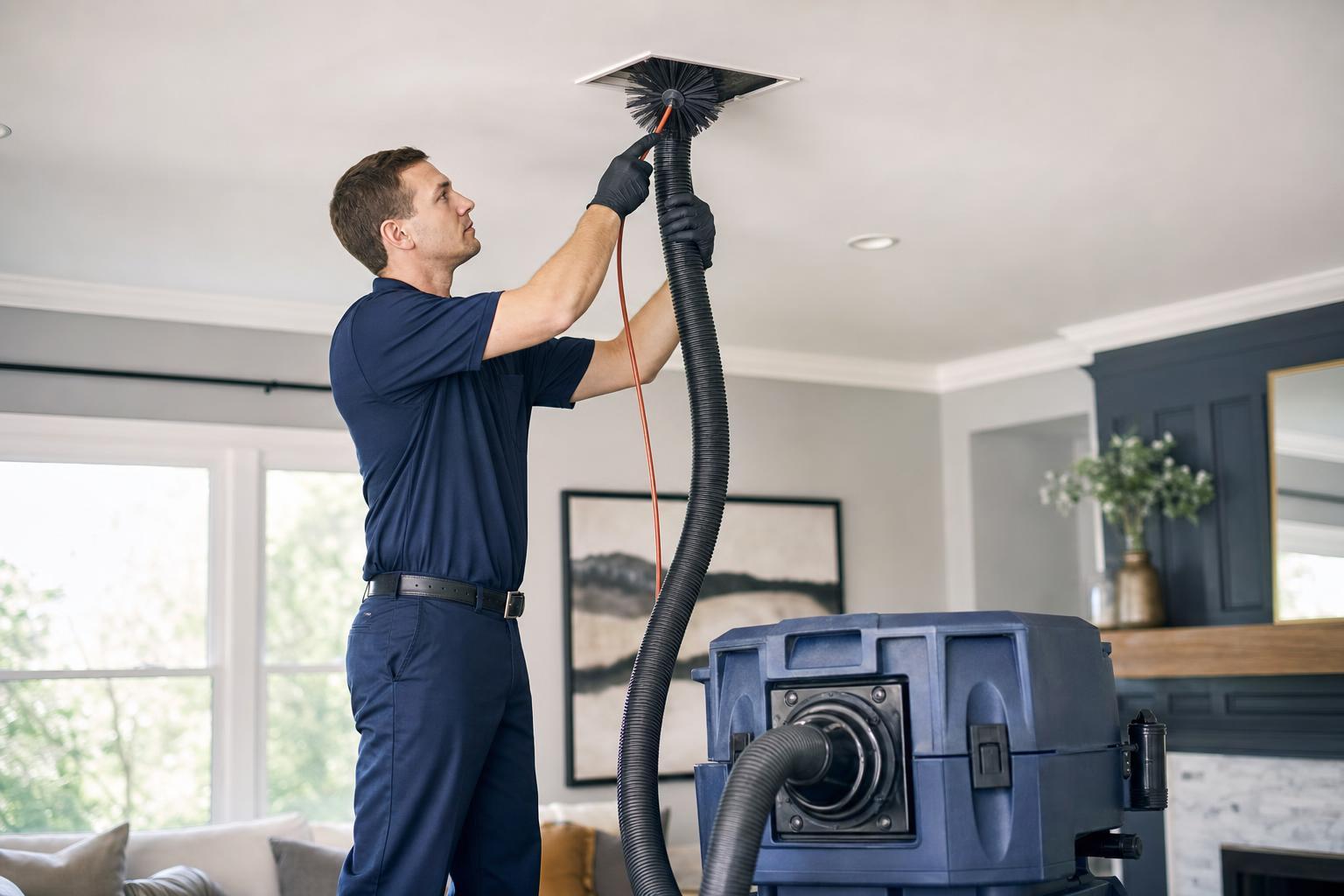
- Set up source-removal cleaning using agitation tools — air whips, skipper balls, and rotary brushes — matched to duct material and size.
- Establish negative pressure on the system with a HEPA-filtered collection unit so loosened debris is captured, not spread around.
- Build containment and protect occupant spaces during residential and commercial cleaning to prevent cross-contamination.
- Clean and service coils, blower assemblies, drain pans, and other HVAC components beyond the ductwork.
- Identify when antimicrobial treatment is appropriate and apply EPA-registered products according to label directions.
By city
Air Duct Cleaning certification in Massachusetts cities
The process
How it works
Enroll & pay
Secure checkout, instant course access.
Complete the course + pass the exam
Guided lessons with real job scenarios, then a 20-question exam — 75% to pass, unlimited retries.
Download your certificate
Personalized certificate generated instantly, with a unique verification ID.
Questions
Air Duct Cleaning certification in Massachusetts — FAQ
- Do I need a license to clean air ducts in Massachusetts?
- Duct cleaning is generally not a separately licensed trade, but you usually need a local business license. Installing or fabricating ductwork is different and may require a sheet metal license. Verify current local and state requirements. A NISCR certificate is training, not a government license.
- Is air duct cleaning in demand in Massachusetts?
- Yes. Homes stay sealed through cold winters and humid summers, accumulating dust, allergens, and mold in ductwork, which sustains demand, particularly across the densely populated Boston metro area.
Nearby